AI and creativity can coexist, even though plenty of people feel nervous about that idea. I get it. Every week brings a fresh wave of hot takes. One camp says AI will flatten creative work forever. Another says it will fix everything. In my view, both camps miss the point.
Here is what I believe. AI can’t, and shouldn’t, fully replace human creativity. But used correctly, it can elevate it. The difference comes down to how you use it.
Where AI and creativity go wrong
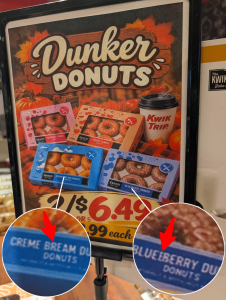
You have probably seen the evidence by now. A poster, an ad, or a social graphic looks polished at first glance. Then something feels off. The lettering almost says what it should, but not quite. Meanwhile, the textures look a little too perfect. Overall, the piece has a glossy, generic look that seems oddly familiar.
People call this “AI slop,” and the label stuck because it’s so easy to detect. When someone uses AI as a shortcut, the results look like everyone else’s shortcut. Quick prompts and first-draft results produce the same cookie-cutter output. As a result, the work blends into the crowd instead of standing out.
The glitchy details make things worse. Garbled text and warped shapes slip through when nobody takes a second look. In the end, the real problem isn’t that a machine made a mistake. The problem is that no human noticed, or cared enough to fix it before the work went public.
I don’t say this to mock anyone. Deadlines are real, and budgets get tight. Still, a shortcut that skips the human eye often costs more than it saves.
The tool reveals the person
Every creative tool from the last few decades has done the same thing. Photoshop didn’t make everyone a designer. Canva didn’t make everyone a brand strategist. Autotune didn’t make everyone a singer. Each tool gave people more power, and each one quickly showed who had something to say.
The relationship between AI and creativity follows the same pattern. AI works more like a mirror than a replacement. If you bring a clear idea, a point of view, and good taste, it can help you go further. If you bring nothing, it hands you the average of everything.
That’s why the “AI is good” versus “AI is bad” debate feels so stale. It skips the interesting part. The real story lives in the how.
Where AI and creativity work well together
Used with intention, AI becomes something else entirely. Think of it as a creative partner that never tires of your questions. When AI and creativity team up on purpose, here are a few ways it earns its place.
Brainstorm without the blank page
Every creative person knows the blank page. AI can give you something to react to. First, ask for twenty rough directions. You will probably dislike most of them, and that’s useful. Knowing what you don’t want helps you spot what you do.
Break out of a rut
Habits feel comfortable, but they also narrow your thinking. Instead, ask AI to approach your problem from an unexpected angle, such as a different audience, era, or tone. Most suggestions won’t fit. However, one might crack open an idea you never would have reached alone.
Sharpen the mess
Creative minds are rarely tidy. Big ideas tend to arrive all at once, half-formed and out of order. AI can help you sort that stream of consciousness and shape it into words that land. You still supply the ideas and the meaning. The tool simply helps with structure and clarity.
Test more angles in less time
Speed is the obvious benefit. With AI, you can test ten angles in the time it used to take to test one. As a result, you get more chances to find the approach that works. Of course, faster doesn’t automatically mean better. It only helps when you know what you’re looking for.
Bring your taste to whatever comes back
Whatever AI returns is raw material. Your taste, your judgment, and your point of view decide what stays, what goes, and what needs a human touch. Also, check the details. Read every word and zoom in on every image. That second look is exactly what slop skips.
Use generative AI as a helper, not the finish line
Generative AI deserves its own mention. It can produce glossy designs and photo-realistic video in seconds, and that’s impressive. Still, it isn’t close to delivering a final product that holds up in a professional setting. Details drift, text breaks, and the style tends to feel generic. Even if it were able to make things perfectly, there are arguments to be made about its use.
Instead, treat it as a helper inside your own process. Early on, use it for concepting. Explore moods, color palettes, and layouts before you commit to a direction. Later, use it to fix or tweak work you made yourself. In Photoshop, that might mean extending a background or removing a distracting object. Canva can generate variations of a layout you built. Video editors can lean on it to clean up audio or tidy rough footage.
The pattern is simple. Human creativity sets the direction and makes the final call. AI speeds up the steps in between. When those roles flip, you get slop.
Prompting is a creative skill
Working with AI as a creative partner is a skill in itself. It’s almost a language of its own. Like any language, fluency comes from curiosity, practice, and learning the syntax and structure.
Early attempts often feel clumsy. Over time, you learn to describe tone, audience, constraints, and the feeling you want. Specific, thoughtful prompts get specific, thoughtful results. Vague prompts get vague results. In other words, the quality of what you put in shapes the quality of what you get out. Clear prompts come from clear thinking, and clear thinking is a creative skill too.
Same tool, completely different outcomes
Two people can open the same app and walk away with very different work. One treats it as a shortcut. The other treats it as a partner. The difference was never the technology. It’s what you bring to it.
So the next time you reach for AI, pause for a moment. Ask yourself what you want to say, who you want to reach, and what only you can add. Then let the tool help you say it better.
What do you think? I’d love to hear how you use AI in your creative process. Share your thoughts in the comments.
0 Comments